 Playcard games
Klondike rules
The solitaire everyone means when they say solitaire.
- Solo
- Standard deck
The patience everyone means when they say solitaire, and the one that came with every computer for thirty years. Roughly one deal in three is winnable. Seven columns are dealt with only their last card showing, and the aim is to move all 52 cards onto four foundations, ace to king in each suit. You build down the columns in alternating colours and turn cards from the stock when you are stuck. Whether the stock turns one card or three at a time decides how hard it is.
The layout
Seven columns. One card in the first, two in the second, up to seven in the seventh — 28 cards in all, with only the last card of each column face up. The remaining 24 cards are the stock.
Above the columns, four empty spaces wait for the foundations.
The goal
Build all four foundations from ace up to king, one per suit.
The moves
Onto a column, play a card one rank lower and of the opposite colour: a red six onto a black seven. Move a face-up sequence between columns as a single unit, provided it stays in order. When a face-down card is uncovered, turn it up. An empty column may only be filled by a king, or by a sequence headed by one. Play any available card up to its foundation.
The stock
Turn cards from the stock to a waste pile, one at a time or three at a time. Only the top card of the waste is playable. When the stock runs out, turn the waste over and go again.
One at a time with unlimited redeals is the forgiving version. Three at a time with three passes is the standard one, and it is much harder.
The advice that wins most games: always turn a face-down card if you can, and think twice before filling an empty column, because a column with nothing in it is worth more than most kings.
Klondike: an example game
One game of Klondike followed from the deal to the finish, move by move, with the reason for each choice.
The deal
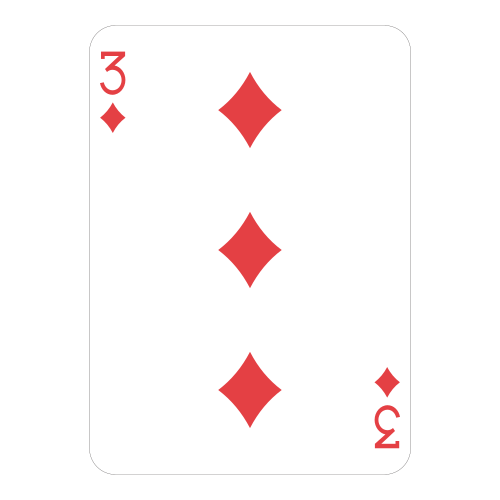
This game is played one card at a time from the stock. The seven columns have one to seven cards, and only the last card of each is face up. In this deal they are: column 1, 4♠; column 2, 8♦; column 3, 9♣; column 4, A♥; column 5, 7♣; column 6, 3♦; and column 7, 10♥. Under them are 0, 1, 2, 3, 4, 5 and 6 face-down cards.
The aim for the first few moves is always the same: get aces up, and turn over as many face-down cards as possible, starting with the columns that have most.
Aces first
A♥ goes straight up to a foundation. The card under it in column 4 turns over — 2♥ — and that goes up too. The next card turned is 6♠, which stays, leaving one face-down card under it.
Aces and twos are always safe to put up: nothing can be built on them in the columns, so there is no reason to keep them down.
Building down in alternating colours
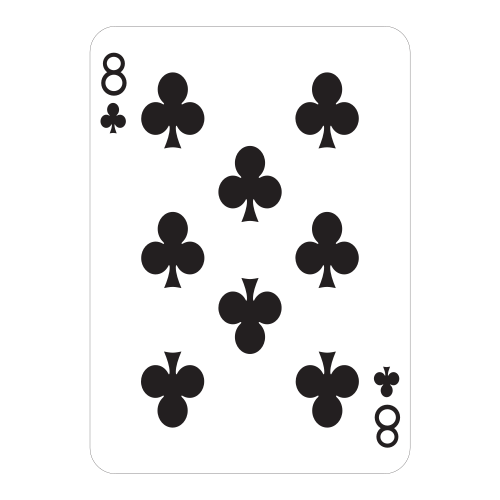
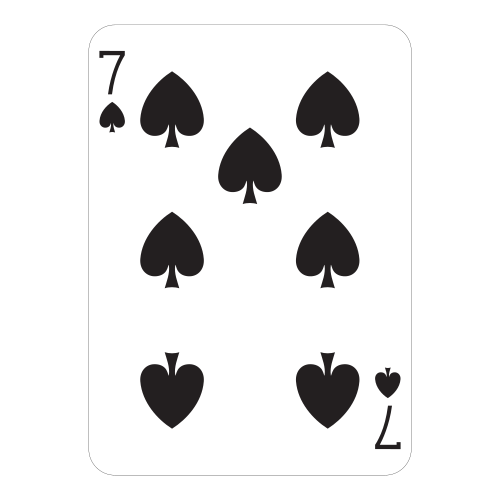
8♦ from column 2 goes on 9♣ in column 3, red on black and one lower, and the card under it turns over: K♣. Column 2 is now a king with nothing hidden beneath it, which is as good as a column that started with a king. Next, 7♣ from column 5 goes on 8♦, turning over 5♥, and 5♥ goes on 6♠ in column 4, turning over Q♦.
Q♦ goes on K♣, turning over J♠, and J♠ follows it onto Q♦. That turns up 2♣, the last card in column 5. Column 7 has the most hidden cards, so its 10♥ goes on J♠ next, which turns over Q♠.
An empty column
4♠ in column 1 can go on 5♥, and moving it empties column 1. Only a king — or a run headed by a king — can fill an empty column, so there is no hurry to fill it. Then 3♦ from column 6 goes on 4♠, turning over 8♣ with four cards still hidden beneath.
Column 4 now reads 6♠ 5♥ 4♠ 3♦, and column 3 reads 9♣ 8♦ 7♣. The only other move on the table is 2♣ onto 3♦, and there is no point to it: once its ace is up, the two can go straight to the foundation. So it is time for the stock.
Turning the stock
The first card from the stock is 6♥, which goes on 7♣. The second is A♣, which goes up to a foundation, and that lets 2♣ from column 5 follow it. Column 5 is now empty as well.
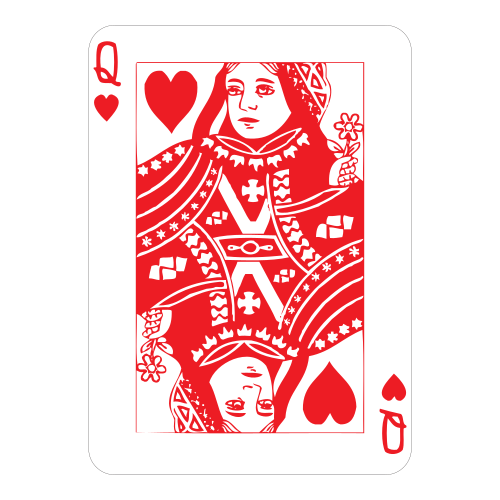
The next card, 9♦, has nowhere to go and stays on the waste. The one after it is K♥, and a king is exactly what an empty column is for: it goes into column 1. Q♠ from column 7 goes on it, and column 7 turns over 4♦, with four cards still face down.
Where the deal stands
After a couple of minutes, hearts and clubs are started on the foundations, two kings are heading columns, column 5 is empty and waiting for a king, and ten face-down cards have been turned over. Nearly every move turned a card over or put one up.
From here the same habits carry the deal: keep turning cards in the longest columns, keep one column empty until a king is ready for it, and do not rush cards to the foundations while you may still need them to build on.
Found a mistake, or something unclear, in these rules? Tell us