 Playcard games
Crazy eights rules
Match suit or rank, and play an eight to change the suit.
- 2-7 players
- Standard deck
The ancestor of a whole family of games, and the one almost everyone learns as a child. Match the top card of the pile, and eights are wild.
The deck
A 52-card deck. Five cards each with more than two players, seven with two. The rest becomes the draw pile, and one card is turned face up to start the discard pile.
Your turn
Play a card matching the top of the pile by suit or by rank. A seven of hearts can be followed by any heart, or by any seven.
If you cannot play, draw from the deck. Keep drawing until you find a playable card, or until the deck runs out, and then pass.
The eights
Any eight may be played on anything, and the player who plays it names the suit that must be followed. That is the whole of the game's cleverness — an eight is both an escape and a weapon.
Winning
The first player to shed every card wins the hand.
Scoring
The winner scores the cards left in everyone else's hands:
Each eight: 50
Each court card: 10 Each ace: 1 Every other card: its face value.
Game is usually 100 points per player at the table.
Running out of deck
When the draw pile is empty, either shuffle the discards to make a new one, or play on with players simply passing when stuck. Agree which before you start, because the second version ends much faster.
Crazy eights: an example game
One game of Crazy eights followed from the deal to the finish, move by move, with the reason for each choice.
The deal
Three players sit in this order: you, Ada and Bo. Bo deals five cards each and turns up 9♣ to start the pile. You play first, and play goes to the left.
Your hand: 9♥, K♣, 3♣, 8♦ and 4♠. On any turn you may play a card of the same suit or the same rank as the top card, or an eight.
The first round
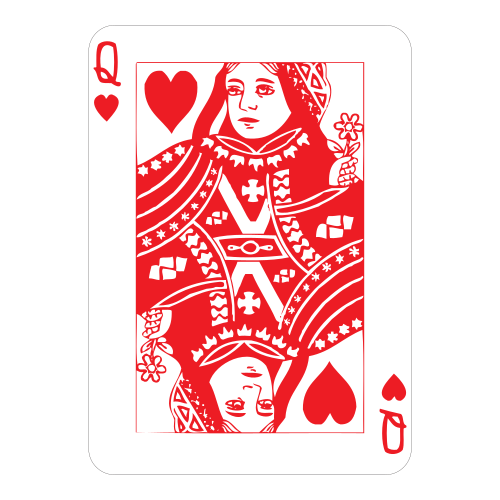
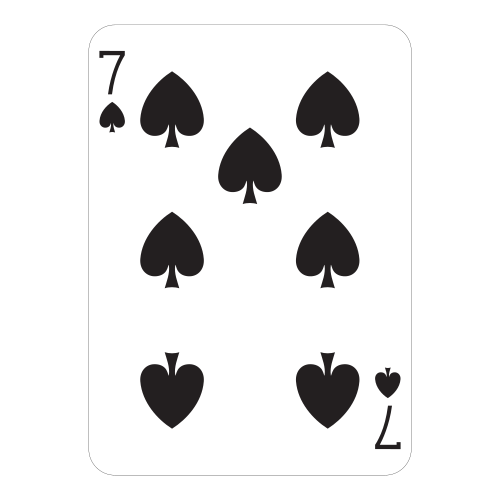
You could play K♣ or 3♣ on suit, or 9♥ on rank. You play K♣ first: a king is worth 10 against you if you are caught holding it, the three only 3. Ada plays K♥, matching the rank and changing the suit to hearts. Bo plays 7♥.
You play 9♥. Ada has no heart and no nine, so she draws until she finds a card she can play: 2♠, then J♦, then 9♠, which matches the rank. She plays it, and the suit is spades. Ada's hand has grown by two.
Spades, and two eights
Bo plays Q♠. You play 4♠, leaving you with 3♣ and 8♦. Ada plays 2♠.
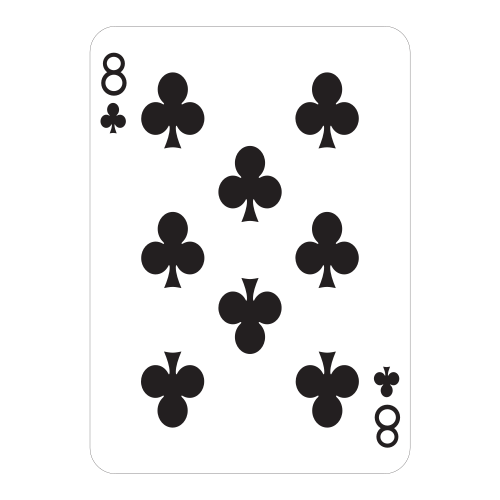
Bo has no spade and no two, only eights, so he plays 8♣ and names hearts. You have no heart, but an eight can be played on anything, including another eight. You play 8♦ and name clubs — the suit of your last card.
Going out
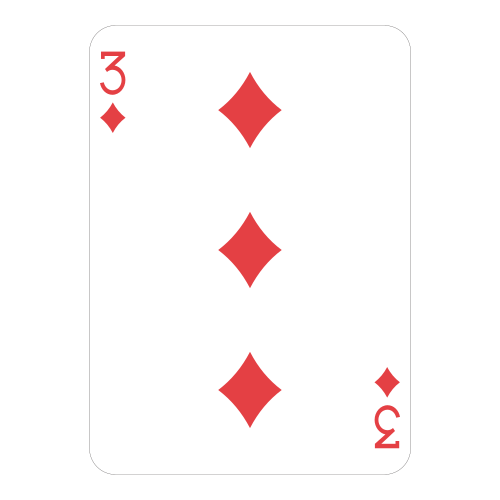
Ada holds 6♣ and plays it. Bo plays J♣. It is your turn, the suit is clubs, and you play your last card, 3♣. You are out.
Naming clubs was the key moment. Naming any other suit would have meant hoping somebody else changed it back to clubs before you were forced to draw.
Scoring the hand
You score the cards left in the other hands: 50 for each eight, 10 for each court card, 1 for an ace and face value for the rest. Ada holds A♠, 4♦, J♠ and J♦: 1 + 4 + 10 + 10 = 25. Bo holds 8♠, which is 50 on its own.
You score 75 from the hand. The next hand is dealt once everyone is ready, and the first to reach the target wins.
What the hand shows
Bo's saved eight cost him 50. Holding an eight back is right while it is your way out, but a hand can end before you get to use it.
You shed your most expensive card first, played on suit and rank before spending your eight, and used the eight to name the one suit that would win you the hand.
Found a mistake, or something unclear, in these rules? Tell us