 Playcard games
Gin rummy rules
Two players knocking on ten points of deadwood or less.
- 2 players
- Standard deck
The two-player rummy, and the sharpest game in the family. You do not lay melds down as you go; you keep everything hidden until you knock.
The deck
A 52-card deck. Ten cards each. One card is turned up to start the discard pile.
Deadwood
Cards not part of any meld are deadwood, and their total is what matters. Court cards count 10, aces 1, number cards face value.
Your turn
Draw the top of the stock or the top of the discard pile, then discard one card. Melds stay in your hand — nothing is laid down until the hand ends.
Knocking
When your deadwood totals 10 or less, you may knock: discard face down, lay out your melds, and show your deadwood.
Your opponent then lays out their own melds, and may lay off any of their deadwood onto yours.
You score the difference between the two deadwood totals.
Gin
Knocking with no deadwood at all is gin. You score the difference plus a 25-point bonus, and your opponent may not lay off against you.
Undercut
If the opponent's deadwood turns out to be equal to or lower than yours, they undercut you: they score the difference plus a 25-point bonus instead. This is why knocking at exactly 10 against a careful player is a bad idea.
Game is 100 points, with bonuses for the winner and for each hand won.
Gin rummy: an example game
One game of Gin rummy followed from the deal to the finish, move by move, with the reason for each choice.
The deal
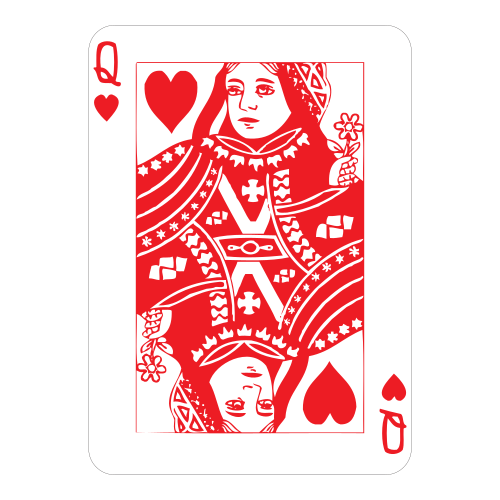
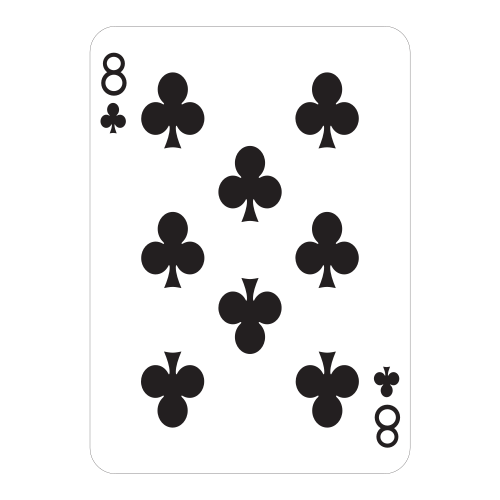
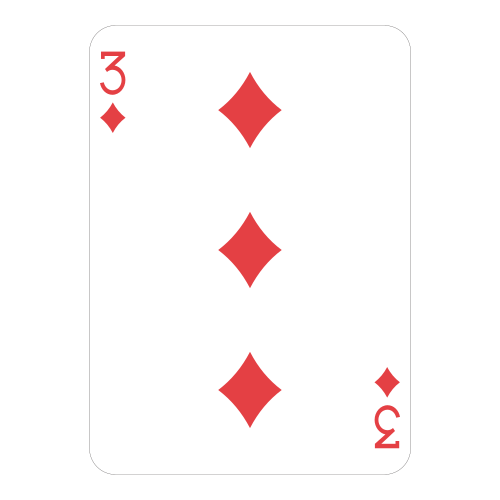
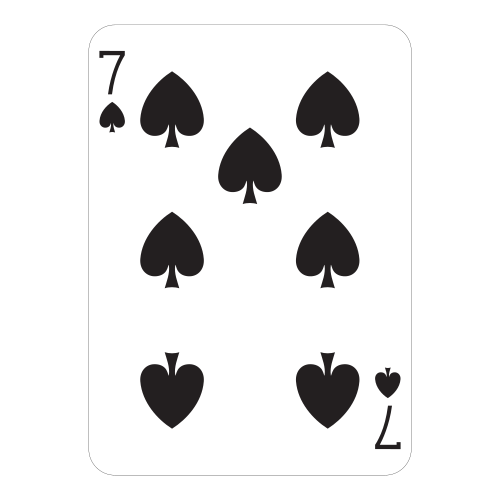
Ada deals ten cards each and turns up 7♦ to start the discard pile. As the player who did not deal, you go first. Your hand: 3♣ 4♣ 5♣, 7♥ 7♠, 9♦, J♠ Q♠, K♥ and 2♦.
You already have one meld, the clubs run 3-4-5. Everything else is deadwood, counted at face value with court cards as 10: that is 7, 7, 9, 10, 10, 10 and 2, for 55.
Your first turn
7♦ on the pile makes a set with your two sevens, so you take it rather than drawing from the stock. Now you must discard, and K♥ is the obvious card: it is worth 10 and has nothing near it.
Your melds are 3♣ 4♣ 5♣ and 7♥ 7♠ 7♦. Your deadwood is 9♦, J♠, Q♠ and 2♦, which comes to 31.
Building towards a knock
Ada draws from the stock and throws 8♣. It does not help you, so you draw from the stock yourself: A♥. You throw 9♦, the highest card that is not close to a meld, and your deadwood is J♠, Q♠, 2♦ and A♥, for 23.
Ada draws again and throws 10♠. That joins your J♠ Q♠ into a run, so you take it. Your hand is now 3♣ 4♣ 5♣, 7♥ 7♠ 7♦, 10♠ J♠ Q♠, plus 2♦ and A♥.
The knock
You have eleven cards and must discard one. Throwing 2♦ leaves A♥ as your only deadwood: 1 point, well under the 10 you need to knock. You could hope to draw a card that makes gin, but every turn you wait is a turn Ada could knock or get low enough to undercut you.
So you knock, discarding 2♦, and lay your hand out: three melds and A♥. Ada lays out her hand: 8♥ 9♥ 10♥, K♣ K♦ K♠, and 5♦, 6♠, 7♣ and J♥ loose. She may now lay off loose cards on your melds, and 7♣ fits on your three sevens. Her deadwood is 5, 6 and 10: 21.
The score
You knocked with 1 and Ada has 21, so you score the difference: 20 points. There is no bonus, because you did not go gin, and no undercut, because Ada's count is higher than yours.
Had you waited and gone gin, Ada would not have been allowed to lay off her 7♣, and you would have scored her 28 plus a 25 bonus. Had she got down to 1 or less before you knocked, she would have undercut you and scored the difference plus 25 herself.
Towards 100
Hands like this are played until one player reaches 100. That player then gets 100 for winning the game and 25 for every hand they won along the way, added to the points from the hands themselves.
The hand shows the rhythm of the game: take a discard only when it fits, throw your highest loose cards early, and knock as soon as a low count makes it safe.
Found a mistake, or something unclear, in these rules? Tell us