 Playcard games
Egyptian ratscrew rules
Face cards demand payment, and doubles are there to be slapped.
- 2-6 players
- Standard deck
Slapjack grown into something much better. Face cards demand payment, and the pile can change hands three times in ten seconds.
Players
Two to eight. Children are better at it than adults, which is most of the appeal.
The deck
A 52-card deck dealt out evenly, face down. Nobody looks.
The play
Going round, each player turns their top card into a central pile.
The challenge
When someone plays a face card or an ace, the next player owes cards:
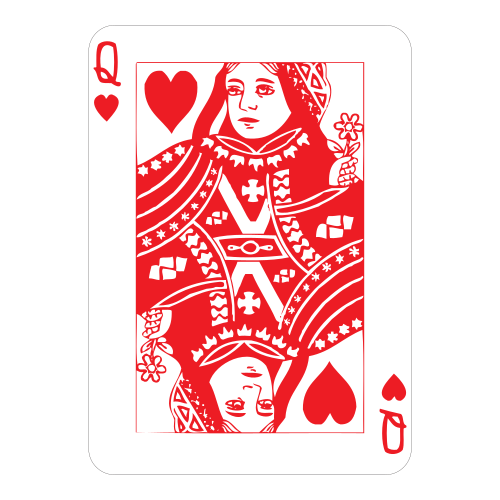
Jack: one card. Queen: two. King: three. Ace: four.
They turn them one at a time. If they turn a face card or ace during that payment, the challenge passes to the next player, who now owes the new amount, and the payment restarts.
If they finish paying without turning one, the player who laid the original face card takes the whole pile.
The slaps
At any point, anyone may slap the pile:
Double — the top two cards are the same rank. Sandwich — two cards of the same rank separated by one other. Top-bottom — the top card matches the very bottom card of the pile.
The first hand down takes everything, and play restarts from them.
A wrong slap costs you two cards to the bottom of the pile.
A slap beats a challenge: a double that appears in the middle of somebody paying for a king takes the pile away from both of them.
An example
Bo lays a queen, so Cleo owes two. Her first card is a nine and her second is a nine as well — a double, and anybody who slaps it first takes the pile, the queen included.
Running out
A player who plays their last card stays in until the next slap opportunity passes. Slap in and they are back.
Winning
One player ends up with all 52 cards. Agree which slap rules are in force before you start — every table plays a different set.
Some tables burn one card for a wrong slap rather than two, and many add further slaps — a marriage, a queen on a king, or ten-high totals. None of them changes the game; all of them change the arguments.
Found a mistake, or something unclear, in these rules? Tell us