 Playcard games
Concentration rules
The whole deck face down. Turn two, remember everything.
- 1-8 players
- Standard deck
Also called memory or pelmanism. The entire deck goes face down, and the whole game is remembering where things are.
Players
Any number from one upwards, though it is best with two to four.
The layout
Shuffle a 52-card deck and lay every card face down in a grid — four rows of thirteen, or any arrangement everyone can reach.
The play
On your turn, turn two cards face up so everyone can see them.
If they match in rank, you take both and go again. If they do not match, turn them back face down in exactly the same places, and play passes on.
Suits do not matter, only rank. Some players require the colours to match too, which halves the number of valid pairs and makes for a much longer and harder game.
When a pair is taken, the gap it leaves stays empty. Nobody closes up the grid, because every card everyone has memorised would move.
An example
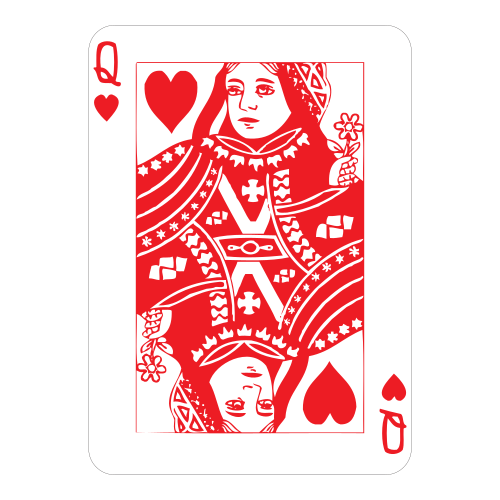
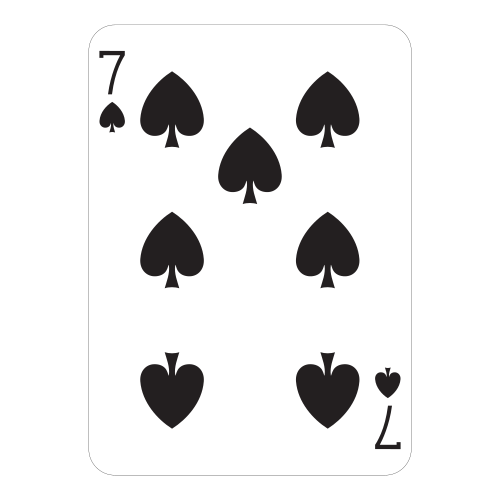
You turn a seven in the top row and a queen in the corner — no match, and both go back. The next player turns a queen, remembers yours in the corner, and takes the pair. Then they turn a card they have never seen, a four, and have to guess.
Winning
Play until the table is empty. Whoever collected the most pairs wins.
Alone
It works perfectly well as a solitaire: clear the whole grid and count how many turns it took, then try to beat it.
With small children
Use half the deck — just two suits, 26 cards — and lay it out in a smaller grid. It stays winnable, which matters more than the challenge.
Playing well
Always turn your first card from the cards nobody has seen yet. If it matches one you remember, you take a pair; if not, you have at least learned something. Only turn a card you already know as the second card, and only when you know where its partner is.
The one real tactic: when you turn over a card you have not seen before and it does not match, pay attention to where the second card goes rather than the first. Everyone remembers their own first card and forgets the one they were forced to reveal.
Found a mistake, or something unclear, in these rules? Tell us